Kerala PSC Degree Level Exam GK Questions and Answers
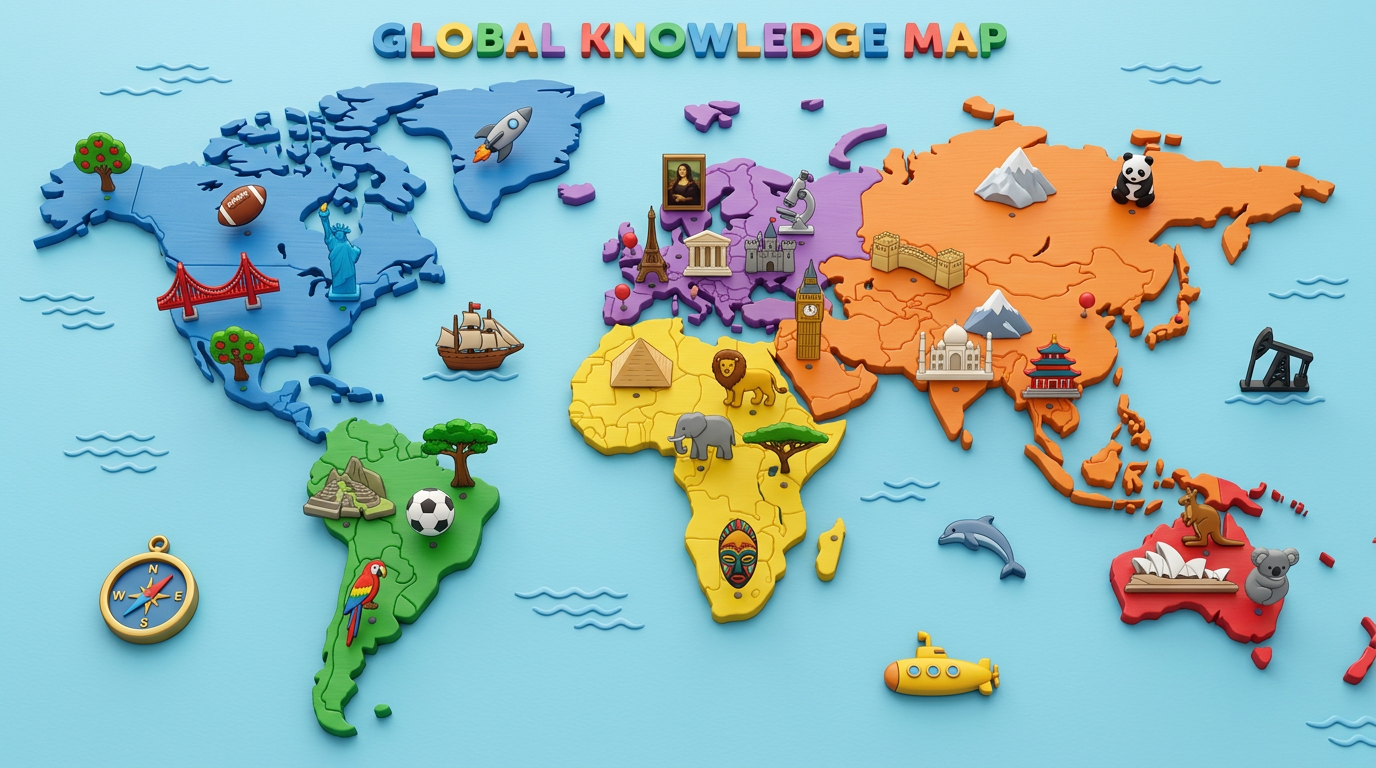
 Illustration presenting Kerala PSC Digital Level Exam with general knowledge focus and study resources
Kerala PSC Degree Level Exam GK Questions and Answers: Master the Essential Topics
General Knowledge is the backbone of every Kerala PSC exam, and at the degree level, the questions get trickier and more diverse. You’ll encounter everything from agriculture and history to governance structures and religious concepts—all designed to test your depth of understanding, not just surface knowledge.
In this guide, we’ve compiled the most important GK questions that have appeared in previous Kerala PSC degree-level exams. Whether you’re preparing for LDC, LGS, or higher-level positions, these questions and detailed answers will help you build rock-solid confidence and boost your score significantly.
Why Does This Topic Appear in Kerala PSC Exams?
General Knowledge covering subjects like agriculture, geography, history, governance, and social systems forms a crucial part of Modern India and constitutional topics for degree-level and higher-tier PSC exams. You’ll see these questions consistently across LDC, LGS, and degree-level recruitment tests year after year—it’s a guaranteed portion of your exam.
Mastering GK directly improves your exam scores because these topics test your logical thinking and real-world awareness. When you understand the “why” behind answers, you’re not just memorizing—you’re building the kind of knowledge that helps you tackle even unfamiliar questions with confidence. Plus, exploring Modern India questions and answers for degree-level exams gives you the edge you need to stand out from other candidates.
Key Concepts You Must Understand
General Knowledge isn’t just random facts—it’s interconnected information about how our society, governance, and natural world work together. Start by grasping the fundamentals: India’s constitutional framework, key historical events that shaped modern India, agricultural practices relevant to Kerala, and major geographical and social concepts. When you understand these core ideas, every related question becomes easier to answer.
The second key point is that degree-level GK questions often blend multiple topics together. For example, a question might ask about both governance and historical context, or agriculture and economics combined. To handle this complexity, exploring science and technology questions alongside traditional GK topics helps you see the bigger picture and connect different areas of knowledge.
Smart Study Tips Before You Begin
Here’s a practical tip: don’t just memorize answers—create mind maps linking related concepts together. For instance, connect agricultural policies to economic impacts, or historical events to modern governance structures. This approach transforms random facts into a coherent knowledge system that sticks in your memory much longer than cramming ever will.
For revision, use the technique of weekly review cycles: study a topic on Monday, revisit it on Wednesday, and test yourself on Saturday. This spaced repetition works wonders for GK retention. Also, checking out the latest Malayalam GK questions can help you understand how concepts are presented in both English and Malayalam, preparing you for the actual exam experience.
PSC Previous Questions and Answers
Below are the most important questions from previous Kerala PSC examinations on this topic. Read each one carefully!
Kerala PSC Degree Level Exam GK Questions and Answers: Master the Essential Topics
General Knowledge is the backbone of every Kerala PSC exam, and at the degree level, the questions get trickier and more diverse. You’ll encounter everything from agriculture and history to governance structures and religious concepts—all designed to test your depth of understanding, not just surface knowledge.
In this guide, we’ve compiled the most important GK questions that have appeared in previous Kerala PSC degree-level exams. Whether you’re preparing for LDC, LGS, or higher-level positions, these questions and detailed answers will help you build rock-solid confidence and boost your score significantly.
Why Does This Topic Appear in Kerala PSC Exams?
General Knowledge, particularly covering subjects like agriculture, geography, history, governance, and social systems, forms a crucial part of Modern India and constitutional topics for degree-level and higher-tier PSC exams. You’ll see these questions consistently across LDC, LGS, and degree-level recruitment tests over the past several years.
Why does Kerala PSC focus so heavily on GK? Because these topics test your awareness as a citizen, your understanding of how society and government function, and your ability to connect historical and current events. A strong GK foundation directly translates to better performance across multiple exam sections and shows the selection board you’re truly prepared.
Key Concepts You Must Understand
Agriculture forms a major GK pillar for Kerala PSC exams. You need to understand the difference between Kharif crops (monsoon-based: rice, bajra, maize) and Rabi crops (winter-based: wheat). This isn’t just memorisation—knowing why these crops are planted when and where they grow helps you answer variant questions confidently.
Beyond crops, Kerala PSC loves testing your knowledge of Indian governance structures, historical figures and discoveries, and philosophical concepts from Buddhism and other traditions. When studying, focus on New Pattern PSC Degree Level and KAS GK Questions which break down complex topics into digestible pieces. Also grasp concepts like the Lokpal system (anti-corruption watchdog), the origin of constitutional terms, and spiritual philosophies—these appear repeatedly in different forms.
Smart Study Tips Before You Begin
Create a simple table or mind map for agricultural topics. Write down crop names, their seasons, regions, and uses in one place. When you can see the connections visually, your brain anchors the information faster, and you’ll recall it under exam pressure without hesitation.
For governance and history topics, use the storytelling method: connect dates, names, and events into a narrative. For example, “Dr. L. M. Singhvi coined the Lokpal concept → it became a statutory body → today it functions as India’s Ombudsman.” This chain-link approach beats random memorisation every time. You can also deepen your understanding by exploring seasonal and geographical patterns through dedicated PSC question banks that show how topics interconnect.
PSC Previous Questions and Answers
Below are the most important questions from previous Kerala PSC examinations on this topic. Read each one carefully, understand the logic behind the correct answer, and try to answer them yourself first before checking the solution!
1. Which of the following are Kharif crops?
- Rice
- Bajra
- Wheat
- Maize
<
p class=”wp-block-paragraph”>Select the correct answer using the code given below:
a. 1 and 4
b. 1, 2 and 3
c. 1, 2 and 4
d. 1, 2, 3 and 4
<
p class=”wp-block-paragraph”>Answer: (c) 1, 2 and 4
2. Who discovered New Caledonia and when?
a. James Cook, 1774
b. James Watson, 1799
c. Benjamin Cabrera, 1776
d. John Dalton, 1770
Answer: (a) James Cook, 1774
3. Consider the following statements:
- The term Lokpal and Lokayukta was coined by Dr. L. M. Singhvi.
- Lokpal and Lokayukta are statutory bodies with constitutional status.
- They perform the function of an Ombudsman and inquire into allegations of corruption against certain public functionaries.
Which of the following statement(s) is/are correct?
a. 1 and 2
b. 1 and 3
c. 2 and 3
d. 1, 2 and 3
Answer: (d) 1, 2 and 3
4. Which of the following are correctly matched?
- Buddha – The highest spiritual potential in everyone
- Dhamma – The teachings of Buddha
- Sangha – Order of monks who follow Buddhism
Choose the correct option:
a. 1 and 2
b. 1 and 3
c. 2 and 3
d. 1, 2 and 3
Answer: (d) 1, 2 and 3
5. Which of the following scientists were awarded the Nobel Prize in Physiology or Medicine 2020?
- Harvey J. Alter
- Charles M. Rice
- Michael Houghton
- William G. Kaelin Jr.
Choose the correct option:
a. 1, 2 and 3
b. 1, 2 and 4
c. 2, 3 and 4
d. 1, 3 and 4
Answer: (a) 1, 2 and 3
6. Choose the correct statement(s) related to Regur Soils or Black Cotton Soils:
- It is formed by the solidification of lava spread over a large area of the Deccan Plateau.
- They are very rich in mineral content because these soils were formed due to volcanic activities.
- They are found in Karnataka, Maharashtra, Madhya Pradesh, Gujarat, Andhra Pradesh and Tamil Nadu.
a. Only 1
b. Only 2
c. Both 1 and 2
d. 1, 2 and 3
Answer: (d) 1, 2 and 3
7. Which of the following is the river island of the Brahmaputra?
a. Majuli
b. Minicoy Island
c. Netrani Island
d. Isukathippa Island
Answer: (a) Majuli
8. Which of the following statements concerning the globe grid is NOT correct?
a. Lines of latitude are always parallel to the equator.
b. Meridians and parallels intersect at right angles.
c. The equator is one-half the length of a meridian.
d. The scale on the surface of the globe is everywhere the same in every direction.
Answer: (c) The equator is one-half the length of a meridian.
9. Consider the following statements related to the scale of a map:
- The smaller the scale of the map, the larger the area it covers.
- The smaller the scale of the map, the more accurately its content can be displayed.
Which of the following statement(s) is/are correct?
a. Only 1
b. Only 2
c. Both 1 and 2
d. Neither 1 nor 2
Answer: (a) Only 1
10. Select the correct chronology of the following hill stations in ascending order of their heights:
a. Darjeeling, Srinagar, Leh, Simla
b. Srinagar, Darjeeling, Simla, Leh
c. Srinagar, Leh, Simla, Darjeeling
d. Simla, Srinagar, Leh, Darjeeling
Answer: (b) Srinagar, Darjeeling, Simla, Leh
Wrapping Up — Keep Going!
You’ve now seen how diverse and interconnected GK topics can be in Kerala PSC degree-level exams. From identifying Kharif crops to understanding constitutional bodies like Lokpal, these questions test both your knowledge breadth and your ability to think logically. The key is consistent practice and connecting concepts rather than isolated memorisation.
Don’t stop here—explore more GK topics, take full-length mock tests, and revisit weak areas regularly. The team at Learn Kerala PSC Online has hundreds of similar question banks and study guides ready for you. Keep pushing, stay confident, and remember: every question you master today is one fewer mistake on exam day. You’ve got this!
Wrapping Up — Keep Going!
You’ve now got a solid roadmap for tackling GK at the degree level—from understanding why these topics matter to learning smart study strategies that actually work. The questions and answers ahead will cement your knowledge and boost your confidence for exam day.
Keep exploring more topics and practicing consistently with Learn Kerala PSC Online. Remember, every question you master today is a step closer to your dream PSC rank. Stay focused, stay motivated, and you’ve got this!
Discover more from Learn Kerala PSC Online
Subscribe to get the latest posts sent to your email.